- A Lowcountry reality
- Why tides matter so much for mosquitoes around Charleston
- Rainfall
- What early-season mosquitoes are telling you (and what to check first)
- Step-by-step
- Did you know? Quick facts Charleston homeowners can use
- Quick comparison table
- Local angle
- Ready for a more comfortable yard?
- FAQ
- Glossary (plain-English)
A Lowcountry reality: mosquitoes don’t wait for “summer”
If you live in Charleston, South Carolina (especially near marshes, tidal creeks, or low-lying neighborhoods), you’ve probably noticed this pattern: the first truly comfortable porch evenings show up… and so do mosquitoes. Many homeowners expect the worst biting to arrive with peak summer heat, but the Lowcountry’s mix of tides + rain + mild spring temperatures can produce “outbreak” conditions earlier than people think.
Below is a practical, homeowner-friendly breakdown of why mosquito outbreaks in Charleston track tides, how rainfall turns small problems into big ones, and what you can do before your next backyard gathering.
Why tides matter so much for mosquitoes around Charleston
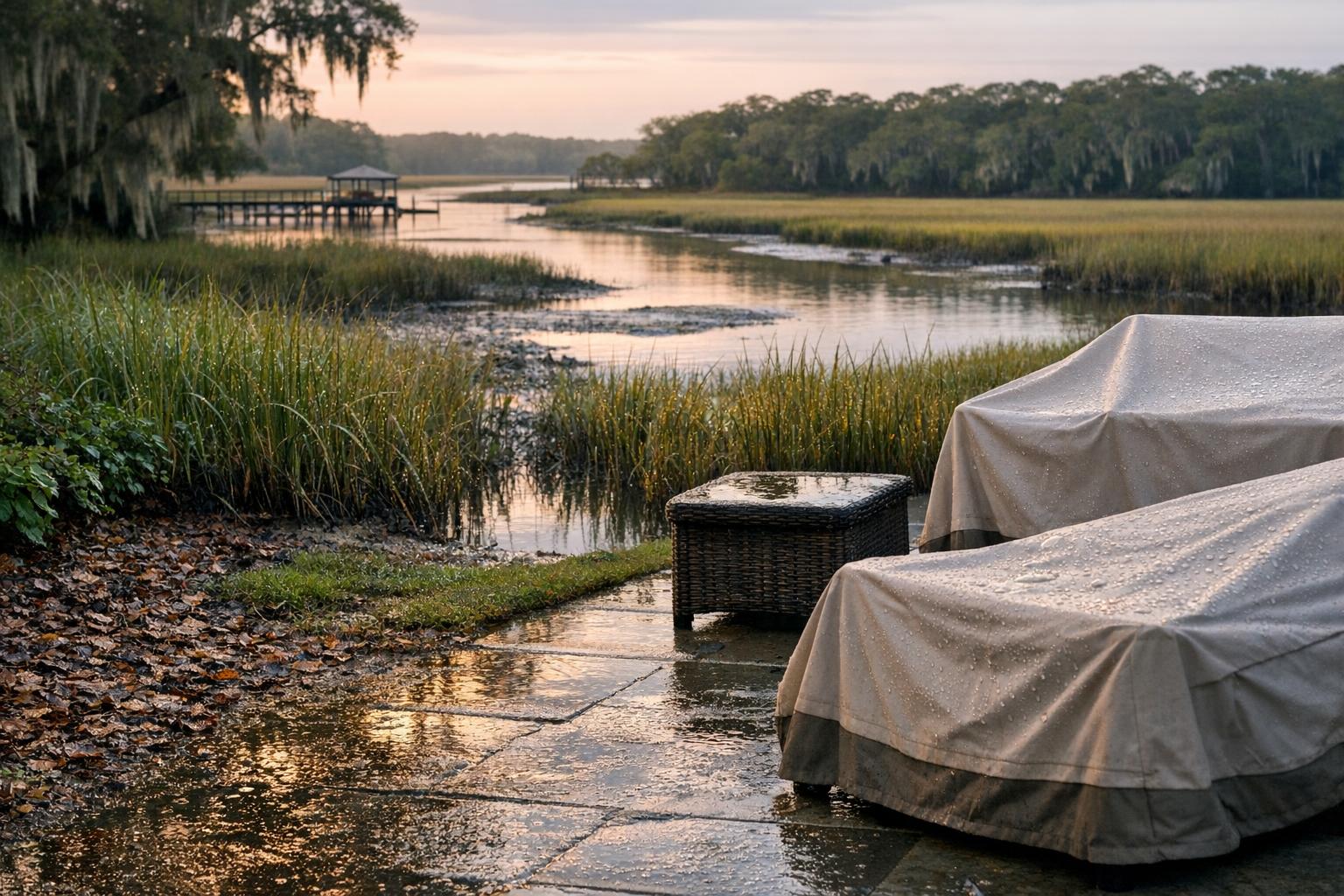
The Charleston area is defined by water: marsh edges, tidal flats, drainage ditches, retention areas, and neighborhoods built close to sea level. When tides run higher than normal (including seasonal “king tide” periods), saltwater and brackish water can push into places that usually stay dry—then recede and leave behind shallow, still pockets of water.
Those leftover pockets are exactly what many mosquito species need. In multiple mosquito types found across the U.S., the immature stages (eggs/larvae/pupae) develop in water, and populations can build fast when the environment keeps re-wetting the same low spots. CDC guidance notes that mosquitoes lay eggs in/near standing water and develop from egg to adult in as little as 7–10 days for common species groups. (cdc.gov)
For homeowners near marshes or tidal creeks, that means a high-tide cycle plus a warm week can “flip the switch” from occasional bites to heavy activity—especially if rainfall stacks on top of it.
Rainfall: the multiplier that turns “some mosquitoes” into “too many”
In the Lowcountry, rain doesn’t just fill birdbaths—it can overload drainage, re-wet marsh edges, and create standing water in yards that look dry most days. Even a small amount of standing water can be enough to support development for container-breeding mosquitoes, and many programs emphasize weekly removal of water-holding items to interrupt breeding.
South Carolina’s Department of Public Health also reminds residents that mosquitoes can develop in water that stands for more than about 5 days and recommends consistent source reduction steps around the home.
Put simply: when rainfall and tides alternate, the environment keeps “refreshing” mosquito habitat—so you may feel like you’re getting hit from every direction.
What early-season mosquitoes are telling you (and what to check first)
If mosquitoes show up “early,” it usually means one of two things is happening:
1) You’ve got a container-breeding hotspot close to where people sit
Think: clogged gutters, plant saucers, toys, tarps, boat covers, outdoor storage bins, wheelbarrows, grill covers, and any “hidden cup” that holds water.
2) You’re near floodwater / low-lying breeding areas that re-wet with tides and rain
Ditches, soggy fence lines, marsh edges, and shaded low spots that stay damp can produce waves of mosquitoes that drift into the yard when the wind is right.
Step-by-step: early prevention for Charleston-area yards (before you host)
Step 1: Do a 10-minute “water audit” every week
The CDC recommends that once a week, you empty and scrub, turn over, cover, or throw away items that hold water (birdbaths, buckets, planters, toys, and more).
Step 2: Fix the “silent producers” (gutters, drainage, and shaded puddles)
If your yard has a low corner that stays damp after rain, treat it like a priority. Improve drainage where possible, clear debris, and don’t ignore puddles that form near downspouts.
Step 3: Make your patio less attractive during peak activity
Mosquito activity can vary by species, but many homeowners get hit hardest around dawn/dusk. Practical wins include using fans on porches (mosquitoes are weak fliers), repairing torn screens, and reducing standing water so you’re not “breeding them in place.”
Step 4: Use professional yard treatments when tides and rain won’t cooperate
When you’re near marsh influence or your neighborhood floods easily, homeowner efforts help—but they may not fully solve it. A consistent mosquito program can reduce adult activity and help break the cycle during the months Charleston residents want to be outside the most. If you want help setting a plan for your property, see our Mosquito Control services.
Did you know? Quick facts Charleston homeowners can use
Quick comparison table: Tide-driven vs. backyard breeding
| Source of mosquitoes | Common signs | Best homeowner moves | When to call a pro |
|---|---|---|---|
| Tide/floodwater breeding (marsh edges, ditches, low spots) | Waves of mosquitoes after higher tides or heavy rain; bites even when your yard looks “clean” | Improve drainage where possible; reduce resting spots (overgrown vegetation); use fans on porches | If activity spikes repeatedly after tides/rain and you can’t eliminate the source area |
| Backyard/container breeding (gutters, toys, planters, birdbaths) | Bites concentrated near patios/doors; worse near specific corners of the yard | Weekly empty/scrub/turn over water-holding items; cover rain barrels; fix screens | If you’re doing weekly water removal and still seeing heavy biting within 1–2 weeks |
Local angle: what this means for Mt. Pleasant and the Charleston barrier-to-marsh corridor
In Mt. Pleasant, SC and across Charleston’s coastal neighborhoods, mosquitoes often become a “weather-and-water” problem, not just a “dirty yard” problem. Homes near tidal creeks, marsh grass, retention ponds, and wooded lowlands may see early biting when:
- Higher-than-normal tides leave behind standing pockets in low areas
- Warm nights speed up development (a full cycle can happen in about a week under favorable conditions)
- Rainfall “reloads” habitats again and again, especially in shaded areas that don’t dry quickly
That’s why early-season prevention in the Lowcountry works best as a routine, not a one-time event before the company comes over.
Ready for a more comfortable yard?
Lowcountry Pest Management helps homeowners and families across Mt. Pleasant and Charleston reduce mosquitoes with practical prevention guidance and professional treatments tailored to coastal conditions.