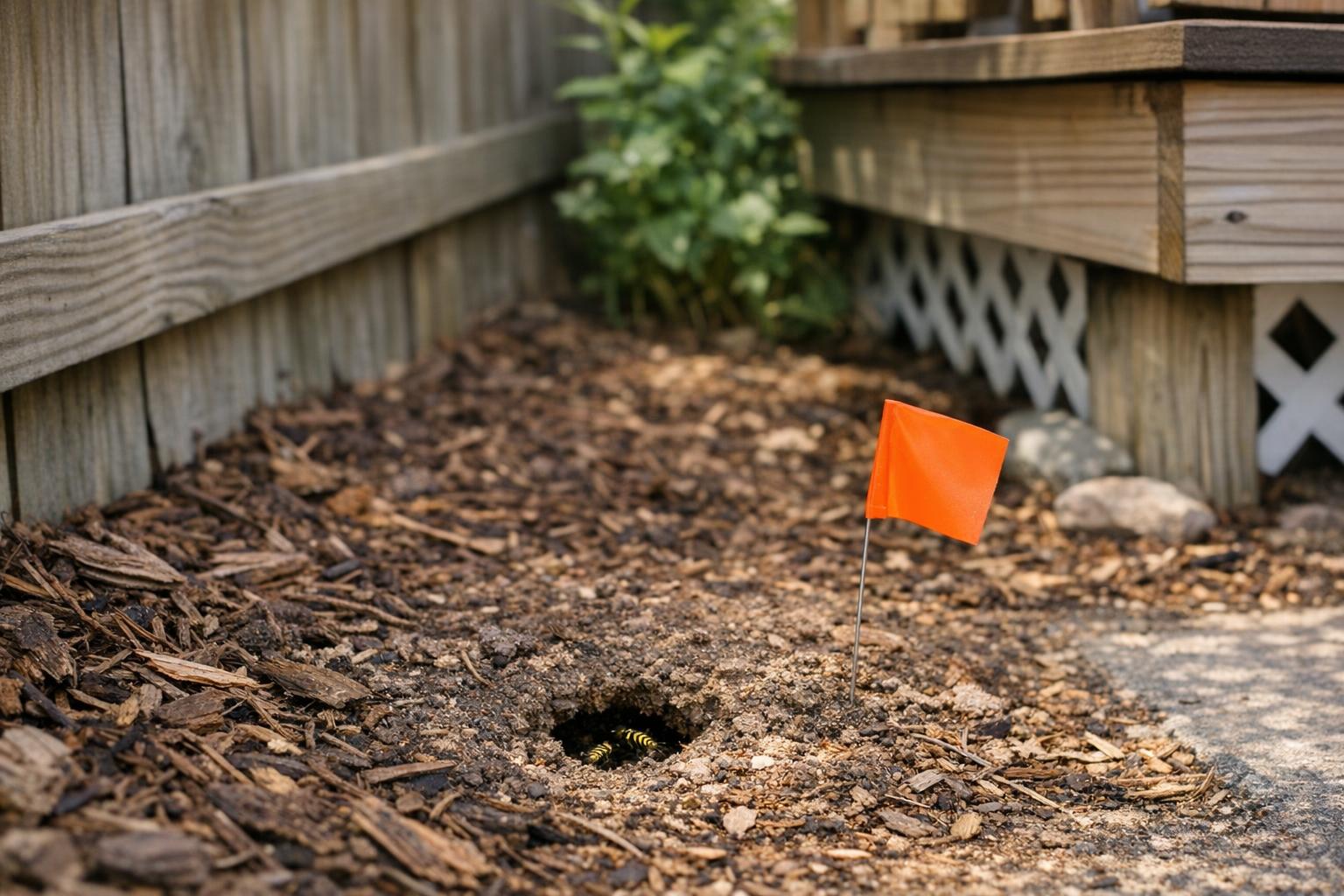
A safer, calmer yard starts with the right ID—and the right timing
In Mount Pleasant and across the Charleston area, yellow jackets are one of the most common “sudden swarm” problems around decks, eaves, fences, trash areas, and play zones. Unlike many stinging insects, yellow jackets can sting multiple times, and their nests can expand quickly once warm weather settles in. If you’re noticing more fast-flying, striped insects cruising low over the lawn or repeatedly entering a small hole near a walkway or flower bed, it’s worth acting early—before outdoor time peaks.
Why yellow jackets become a bigger problem as the season goes on
In South Carolina, yellow jacket colonies typically begin in April or May when overwintered queens emerge and start building new nests. As the colony grows, activity ramps up—more workers, more foraging, and more defensive behavior if the nest is disturbed. Clemson Extension notes that nests are rarely reused the next spring, but that doesn’t help much when an active colony is developing right next to your home this year.
Time of year (Lowcountry)
What you’ll notice
What to do
Spring
A few yellow jackets are scouting; early nest building starts
Inspect common nest zones; address entry points and voids early
Summer
More traffic around food/trash; defensive behavior increases near the nest
Avoid DIY disturbance; get professional removal before outdoor use peaks
Late summer / fall
High population; rapid responses to vibrations, mowing, and foot traffic
Prioritize safety (kids/pets); treat/remove nests with proper PPE and plan
Note: Exact peaks vary by year and microclimate, but the pattern is consistent—small problems in spring can become high-risk nests later in the season.
Where yellow jackets nest around Charleston homes (and what the “telltale signs” look like)
Many homeowners expect to see a hanging nest under an eave. Yellow jackets often do something trickier: they build nests in the ground or inside structural voids. Ground nests are common, and nests can also be found in wall voids, insulation, and ceiling spaces depending on the species and site conditions.
Ground nests
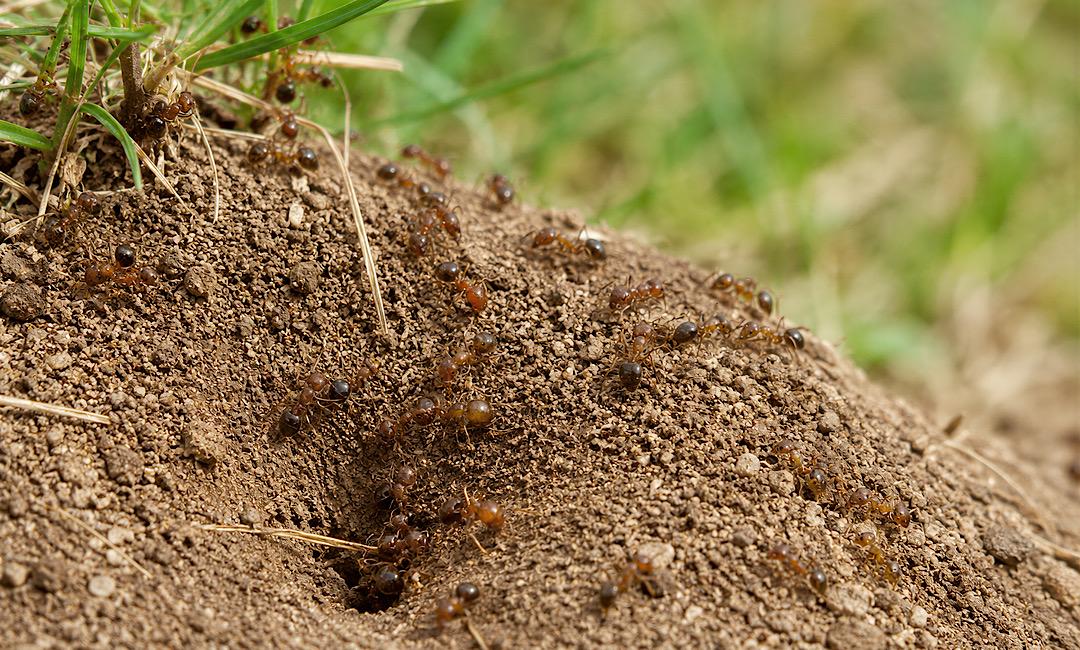
Look for a small entrance hole near mulch beds, retaining walls, fence lines, or the edge of a patio. You may see steady “in-and-out” flight traffic, especially during warm parts of the day.
Wall voids & attic edges
Repeated entry through a tiny gap near soffits, siding, vents, or fascia can indicate a nest inside. You might hear a faint buzzing in the wall in quiet rooms.
Sheds, crawl spaces, and yard clutter zones
Nests can establish in protected, undisturbed areas—especially where moisture, shade, and cover make the site stable.
Quick ID check: yellow jacket vs. honey bee
Yellow jackets tend to look more sharply patterned (bright yellow/black), move quickly, and may hover around food and trash. Honey bees are typically fuzzier and focus on flowers. If you’re unsure, treat it as a stinging-insect risk and keep a distance until you get a professional confirmation.
DIY vs. professional yellow jacket removal: what’s safe, what’s not
When yellow jackets nest in the ground or inside a structure, disturbance is the trigger—mowing, edging, leaf blowing, kids playing, or pets sniffing near the entrance. DIY attempts often fail because they don’t reach the core of the nest, and they can make the colony more defensive.
Situation
Higher-risk factors
Safer next step
Nest near play area / pet run
Frequent vibration, foot traffic, surprise encounters
Schedule removal promptly; restrict access immediately
Wall void / attic entry
Difficult access, risk of driving insects indoors
Professional inspection + targeted treatment plan
Ground nest by walkway/drive
Accidental kicks, mowing, edging
Mark off area; plan removal before routine yard work
Health note (important)
Stings can cause severe allergic reactions (anaphylaxis) in some people, sometimes within minutes. Warning signs can include widespread hives, swelling (especially face/lips/tongue), throat tightness, trouble breathing, dizziness, or a drop in blood pressure. If these occur, seek emergency medical care immediately.
Also, repellents designed for mosquitoes and ticks aren’t reliable for preventing stings from yellow jackets.
Quick “Did you know?” facts (yellow jackets around homes)
They can nest in more places than you think
Ground nests are common, but colonies can also establish in wall voids, insulation, and ceiling spaces, depending on conditions.
They can sting more than once
Yellow jackets aren’t “one-and-done” like honey bees—multiple stings are possible, which raises the urgency when kids or pets are nearby.
Lights can attract them during treatment attempts
Clemson Extension warns they’re attracted to light—one reason nighttime DIY “flashlight + spray” attempts can backfire.
Local Lowcountry angle: why Mount Pleasant, Charleston & coastal neighborhoods see repeat stinging-insect pressure
The Charleston region’s long warm season, frequent outdoor dining, and dense mix of landscaping + structures create ideal “nest opportunities”—mulch beds, irrigation edges, crawl space vents, soffit gaps, and backyard clutter zones. In Mount Pleasant, Daniel Island, Isle of Palms, Sullivan’s Island, and West Ashley, we commonly see yellow jacket activity spike around:
Backyard living areas
Deck stairs, grill pads, outdoor kitchens, and kid play zones where food smells and foot traffic are frequent.
Home exterior “entry-point” lines
Soffits, fascia corners, siding transitions, and utility penetrations—especially if a small gap gives them a repeatable path inside.
Yard edges & disturbed soil zones
Fence lines, garden borders, and spots where soil gets aerated or moved—perfect for unnoticed ground entrances.
If your goal is yellow jacket removal Charleston homeowners can feel good about, prioritize a plan that’s safe for children and pets, and that prevents a “temporary knockdown” from turning into a recurring problem.
Need yellow jacket removal in Charleston, SC or Mount Pleasant?
Lowcountry Pest Management provides safe, region-smart stinging-insect solutions for homes and businesses—ideal when nests are near play areas, inside wall voids, or in tricky ground locations. If you’ve spotted consistent flight traffic or a suspected nest, the safest step is a professional inspection and removal plan.
Request Service / Get a Quote
Same-day and emergency options may be available depending on scheduling and safety conditions.
FAQ: Yellow jacket removal (Charleston & Mount Pleasant)
How do I know if I have a yellow jacket nest or just “a few” yellow jackets?
Repeated flight paths to the same spot (a hole in soil, a gap near soffits, or a vent opening) is the biggest clue. One or two passing through the yard is normal; consistent in-and-out traffic from a single location suggests a nest.
Are yellow jackets more aggressive than other wasps?
They can be very defensive around the nest, especially if vibrations or movement signal a threat. The risk rises when nests are in high-traffic areas (mowing lines, walkways, play spaces).
Can I use insect repellent to prevent yellow jacket stings?
Repellents designed for biting insects aren’t dependable for stinging insects like yellow jackets. The safer plan is to avoid the nest area and remove the nest properly.
What should I do if someone has a bad reaction to a sting?
Treat severe symptoms as a medical emergency. Signs can include widespread hives, swelling of the face/lips/tongue, throat tightness, trouble breathing, dizziness, or fainting. Seek emergency care right away.
Will the nest go away on its own?
Colonies are seasonal, and nests are typically not reused the next spring, but an active nest can remain a major hazard during the months it’s alive—especially near children, pets, and routine yard-work areas.
Glossary
Wall void
The hollow space inside a wall where wiring, insulation, and framing may be present—an area that stinging insects can sometimes use for nesting.
Anaphylaxis
A severe, potentially life-threatening allergic reaction that can occur quickly after a sting and may affect breathing and blood pressure.
Colony
The full yellow jacket “community” (queen + workers + developing young) lives and expands within a nest over the season.