A practical guide for Mount Pleasant yards that get heavy summer use
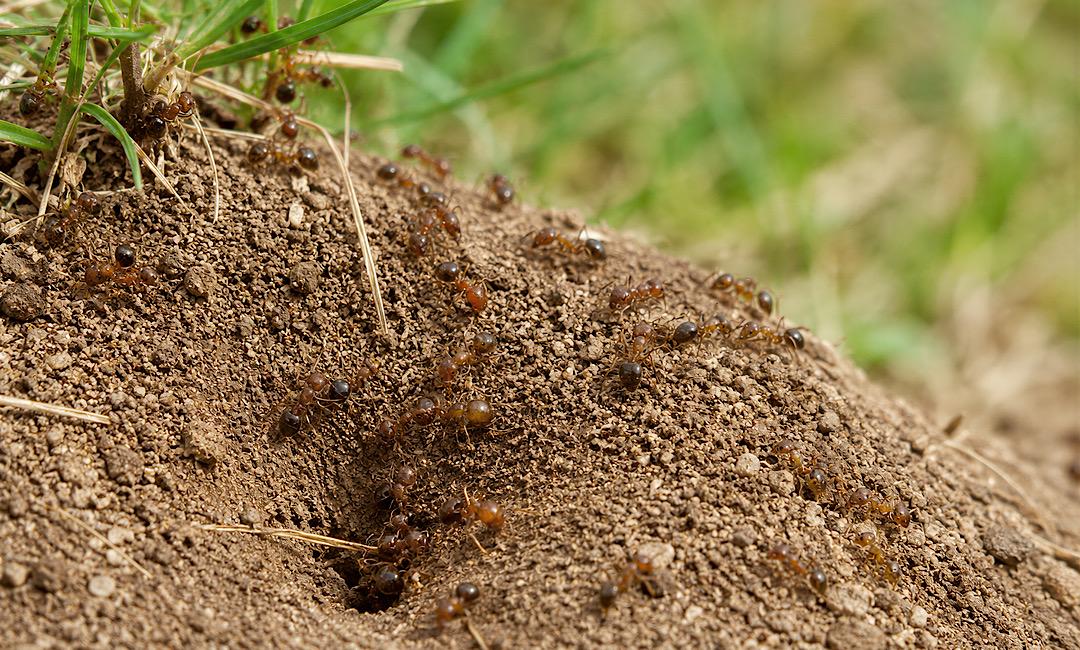
Fire ants are a Lowcountry reality—especially in Mount Pleasant, Charleston, and nearby communities where warm temperatures, sandy soil, and frequent rain create ideal conditions for fast-growing colonies. If you’re seeing new mounds pop up “overnight,” or you’re tired of being pushed off your lawn, patio, or garden beds, the big decision is usually this: broadcast treatment across the yard, or individual mound treatment right on the visible piles.
Both can work—when they’re used the right way, at the right time, and with realistic expectations. Below is a homeowner-friendly breakdown (including kid/pet considerations) to help you choose a strategy that actually holds up through the Charleston-area season.
Quick definitions: “Broadcast” vs. “Mound” fire ant treatments
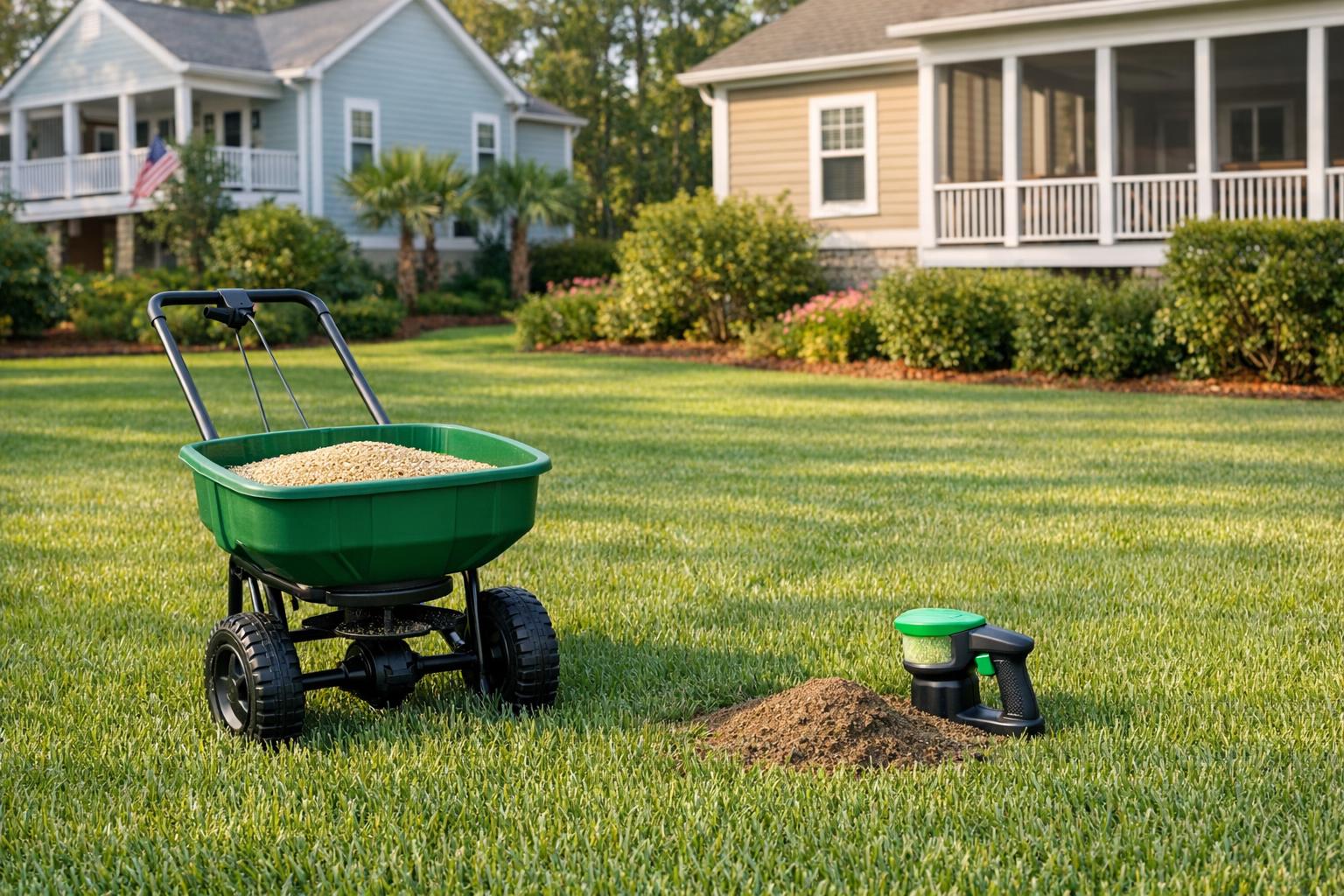
Broadcast treatment means applying a bait or granular product across a wide area (your yard, common areas, perimeter turf, etc.). The goal is to reduce the colonies you can see and the colonies you can’t.
Individual mound treatment means applying a product directly to specific mounds (drenches, dusts, granules, or baits placed around the mound). The goal is a fast knockdown in high-traffic zones.
Many Extension-style recommendations favor a combined approach: broadcast bait for the “whole-yard” problem, then follow up with mound treatments where needed. That’s often the difference between temporary relief and a season-long plan.
Why Charleston-area fire ants feel so relentless
In coastal South Carolina, fire ant pressure ramps up in the warmer months. Colonies expand, foraging increases, and you may see more mound-building after rain or irrigation. That’s why homeowners often feel like they’re “losing ground” even after treating one mound—because there may be multiple colonies nearby, including smaller ones you don’t notice until someone gets stung.
Common Mount Pleasant triggers that spark new activity:
• Warm soil temps and sunny stretches after rain
• Frequent irrigation (especially along sunny edges of turf)
• Mulch beds and landscaped borders near patios and play areas
• Disturbed soil (new sod, planting, fence work, drainage projects)
• Frequent irrigation (especially along sunny edges of turf)
• Mulch beds and landscaped borders near patios and play areas
• Disturbed soil (new sod, planting, fence work, drainage projects)
Broadcast treatment: best for “the whole-yard problem”
If you have mounds showing up in multiple parts of the yard—or you suspect there are more colonies than you can see—broadcasting a bait is often the most efficient, cost-effective approach. Broadcast baits are designed to be picked up by foraging ants and carried back to the colony, where it can impact the queen and the larger population.
When broadcast treatment tends to work best
• You’re seeing multiple mounds across the lawn
• You want to suppress hidden colonies before they become obvious
• You’re aiming for a longer-term reduction, not just “kill this one mound”
• You can be patient: baits often take days to weeks for noticeable results
• You want to suppress hidden colonies before they become obvious
• You’re aiming for a longer-term reduction, not just “kill this one mound”
• You can be patient: baits often take days to weeks for noticeable results
Timing matters. Baits depend on ants actively foraging. If it’s too cool, too hot, or if rain hits right after application, performance can drop. For Charleston-area homeowners, the “best day” is usually a dry window with mild-to-warm conditions and no immediate storms in the forecast.
Kid & pet notes (common-sense):
Many fire ant baits are applied at low rates, but you should always follow the label and keep kids/pets off the treated area for the label-specified re-entry time. If your household has toddlers who touch everything or pets that eat granules, professional application and product selection can reduce worry and improve results.
Mound treatment: best for fast relief in high-traffic spots
Individual mound treatments are the go-to when you need quick action—like mounds beside a driveway, under a swing set, near a grill, along a garden path, or right where kids and pets run. Depending on the product type, mound treatments can work faster than baits, but they typically don’t address colonies elsewhere in the yard.
When mound treatment tends to be the right call
• You have just one or two mounds, and the rest of the yard is quiet
• You need faster knockdown for safety around high-use areas
• You’re planning an outdoor event and want to reduce sting risk quickly
• You’re using mound treatments as a follow-up after a broadcast bait
• You need faster knockdown for safety around high-use areas
• You’re planning an outdoor event and want to reduce sting risk quickly
• You’re using mound treatments as a follow-up after a broadcast bait
Watch the “mound chase” trap: If you only treat the mounds you see, you can end up in a cycle where one mound disappears and another pops up nearby. That’s a common sign the yard needs a broader plan.
A step-by-step fire ant plan that works for many Charleston lawns
Step 1: Map your “sting zones”
Walk the yard and mark where people actually spend time: playsets, dog runs, patio edges, trash bin areas, garden borders, and the sunny sides of the home. These zones get priority for fast control.
Step 2: Choose the right tool for the size of the problem
• Multiple mounds across the yard: broadcast bait first, then spot-treat stubborn mounds
• One or two mounds: mound treatment may be enough (but keep monitoring weekly)
• One or two mounds: mound treatment may be enough (but keep monitoring weekly)
Step 3: Apply on a day ants are active (and weather cooperates)
Avoid applying right before heavy rain or irrigation. For baits, make sure the yard isn’t wet and that ants are foraging (you can often confirm by watching activity near a mound).
Step 4: Re-check and adjust
Baits don’t always look “dramatic” right away. Re-check in 1–3 weeks. If certain mounds remain active in high-traffic areas, use a targeted mound treatment or schedule a professional follow-up.
Step 5: Reduce the things that make reinfestation easier
Keep mulch and leaf litter from building up against foundations, avoid overwatering, and seal gaps where pests can move from exterior to interior. If ants are also getting inside, pairing yard control with routine home pest control can help stop “yard-to-kitchen” problems.
Broadcast vs. mound treatment: side-by-side comparison
| Category | Broadcast Treatment (typically bait) | Individual Mound Treatment |
|---|---|---|
| Best for | Multiple colonies, whole-yard suppression | Fast relief in specific, high-traffic areas |
| Speed | Often days to weeks | Often faster (depends on product type) |
| Coverage | Treats visible and hidden colonies | Only the mounds you treat |
| Common mistake | Applying before rain/irrigation or when ants aren’t foraging | Killing one mound while nearby colonies keep producing new ones |
| Cost-efficiency | Often better per square foot for yard-wide issues | Efficient for a small number of mounds |
A strong “middle ground” for many Mount Pleasant homeowners is: broadcast bait for the yard + targeted mound treatments where people walk and play.
Quick “Did you know?” fire ant facts (useful for prevention)
Did you know? If you apply a bait when ants aren’t actively foraging, results can be disappointing—even if the product is good.
Did you know? Irrigation or rain too soon after application can reduce effectiveness, especially for baits that need to stay attractive and dry.
Did you know? Seeing “new mounds nearby” after treating is often a sign there are multiple colonies—not that the product “did nothing.”
Local angle: what Mount Pleasant & Charleston homeowners can do week-to-week
In the Lowcountry, outdoor spaces get used hard as spring turns into summer—cookouts, pool time, kids on the grass, dogs racing the fence line. A simple routine helps you stay ahead of sting risk:
A realistic weekly checklist
• Walk the yard once a week (5–10 minutes) and note new mounds
• Prioritize “sting zones”: playsets, patios, gardens, paths, gates
• If you keep seeing mounds in multiple areas, consider a broadcast plan instead of chasing one mound at a time
• If ants are showing up indoors too, pair yard control with ongoing general pest control service so the problem doesn’t migrate inside
• Prioritize “sting zones”: playsets, patios, gardens, paths, gates
• If you keep seeing mounds in multiple areas, consider a broadcast plan instead of chasing one mound at a time
• If ants are showing up indoors too, pair yard control with ongoing general pest control service so the problem doesn’t migrate inside
If your property backs up to marshy edges, wooded buffers, drainage areas, or shared greenspaces (common in Mount Pleasant neighborhoods), you may also see more reinfestation pressure—another reason broadcast strategies can outperform single-mound fixes.
Want help choosing the right fire ant treatment approach?
Lowcountry Pest Management helps homeowners and families in Mount Pleasant, Charleston, and surrounding areas reduce fire ant activity with eco-conscious options and targeted plans built around how you use your yard—kids, pets, gardens, patios, and all.
Prefer a whole-home approach? Explore our Pest Control Services for ongoing protection.
FAQ: Fire ant control in Charleston & Mount Pleasant
Which works better in Charleston: broadcast or mound treatment?
If you have fire ants in multiple areas, broadcast bait is often the better foundation because it targets colonies you don’t see. Mound treatment is excellent for fast relief in a few spots or as a follow-up where activity persists.
How long does it take for a broadcast bait to work?
Many baits take days to weeks, depending on the active ingredient, colony size, and whether ants are foraging when applied. If you need immediate results in a specific spot, a targeted mound treatment may be the better short-term move.
Is DIY fire ant control safe for kids and pets?
It can be, but safety depends on the product and how it’s applied. Always follow label directions and re-entry guidance, and avoid leaving granules where pets might eat them. If you want a plan that prioritizes family/pet safety and reduces guesswork, professional treatment is often the simplest route.
Why do mounds come back after I treat?
Common reasons include: multiple colonies in the yard, treating when ants aren’t foraging, rainfall/irrigation interfering, or using a method that kills workers but doesn’t impact the colony long-term. A broadcast + spot-treatment plan usually improves consistency.
Should I treat the entire yard or only the mounds I see?
If you’re seeing mounds in more than one area, treating the entire yard with a broadcast bait can help reduce hidden colonies and future mound formation. If you only have one mound, targeted treatment can be enough—just keep monitoring weekly.
Glossary (helpful terms)
Broadcast treatment: Applying a product across a wide area of turf/landscape to reduce ant colonies throughout the yard.
Individual mound treatment (IMT): Treating one specific mound directly using a drench, dust, granules, or bait placed around the mound.
Bait: A food-based carrier with a small amount of active ingredient designed to be carried back to the colony by worker ants.
Foraging: When worker ants are actively leaving the mound to search for food—critical for bait performance.
Colony: The entire fire ant population associated with a nest system (workers, brood, and queen). The mound you see is only part of the structure.