Fast relief for scratching noises, droppings, and that “something died up there” smell
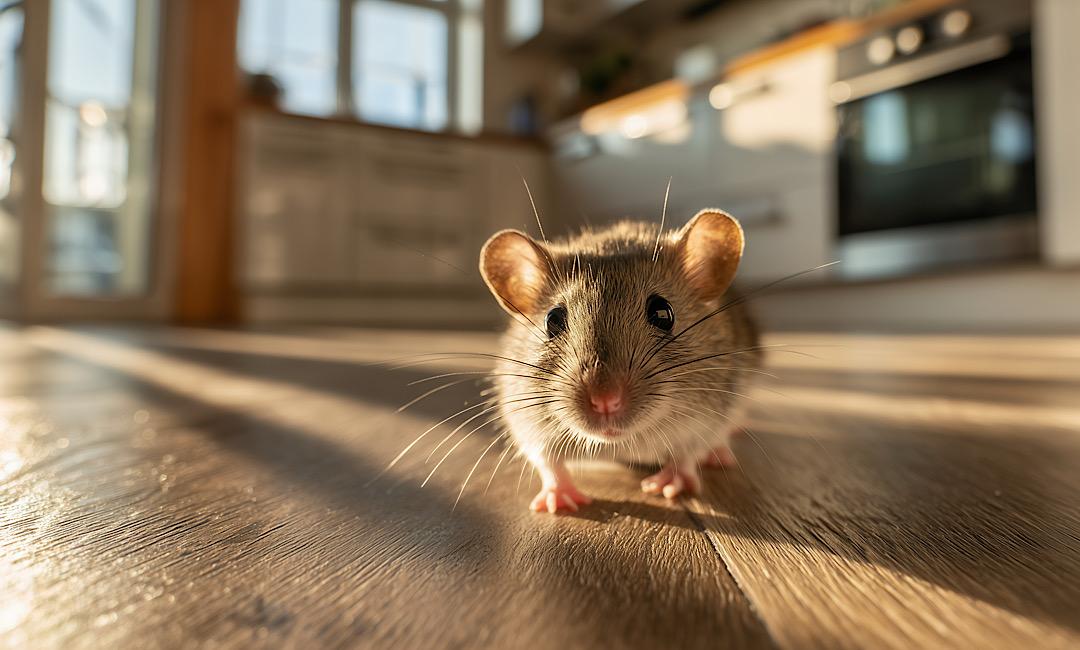
Humid Lowcountry summers push rodents to seek stable shelter, food, and water—often in shaded, older coastal homes where attics, soffits, and crawl spaces offer easy access. If you’re hearing scurrying at night, seeing droppings near HVAC platforms, or noticing a sour ammonia-like odor, the goal isn’t just removal—it’s safe cleanup plus long-term exclusion so you don’t repeat the cycle next month.
Why summer rodent problems spike in Mount Pleasant
In Mount Pleasant and the greater Charleston area, summer conditions can make rodent activity feel sudden—one week everything is quiet, the next you’re finding droppings and hearing scratching in the attic. Common drivers include:
Heat + humidity: attics get hot, but they’re dry, hidden, and close to food odors (kitchens, pantries, pet food). Rodents also follow HVAC condensation lines and moisture sources.
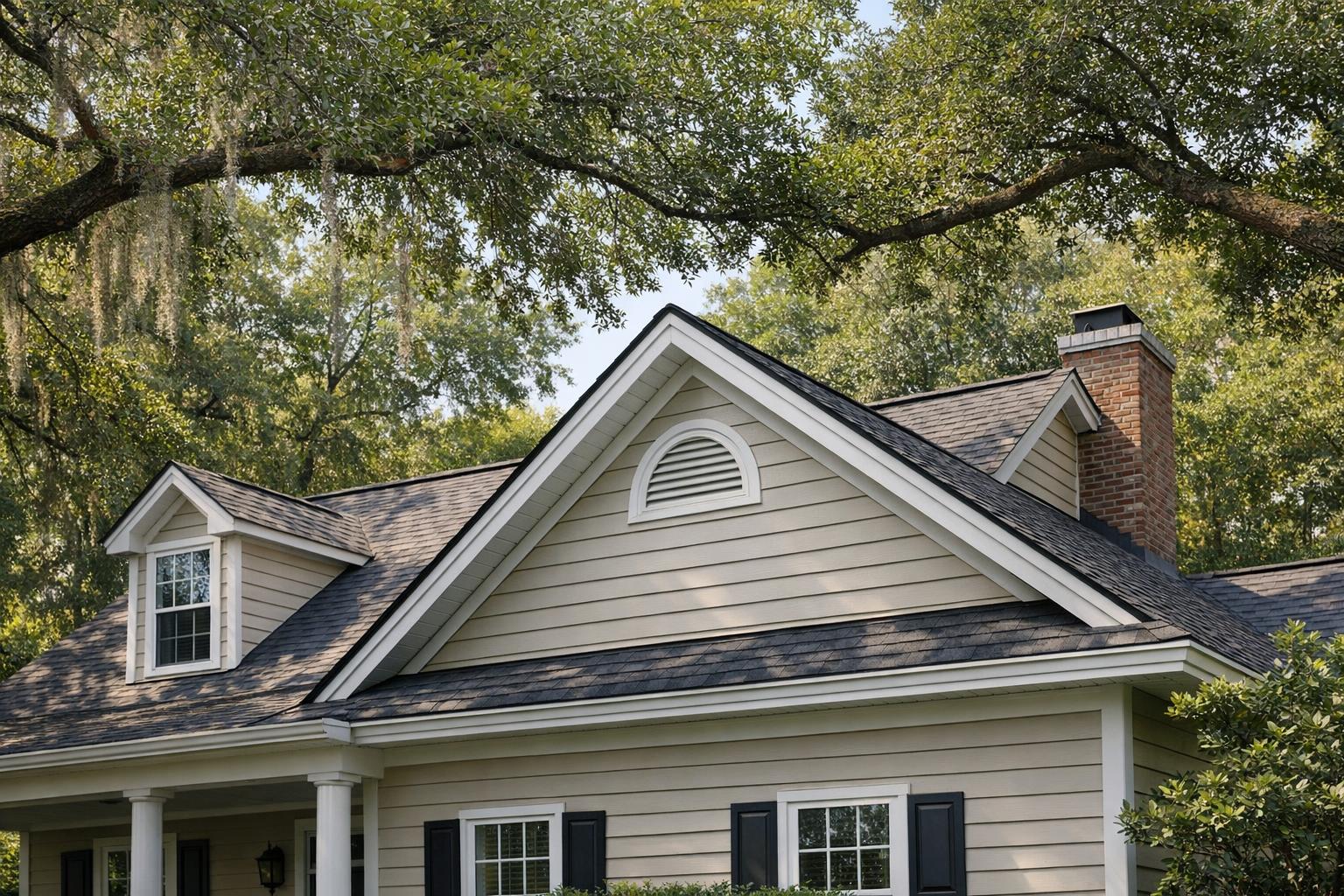
Easy entry points: roofline gaps, fascia returns, gable vents, damaged screens, plumbing chases, and garage door corners are frequent access routes.
Fast reproduction: if you’re seeing droppings, you may be dealing with more than a single intruder—especially if activity continues for multiple nights.
First priority: protect your household during cleanup
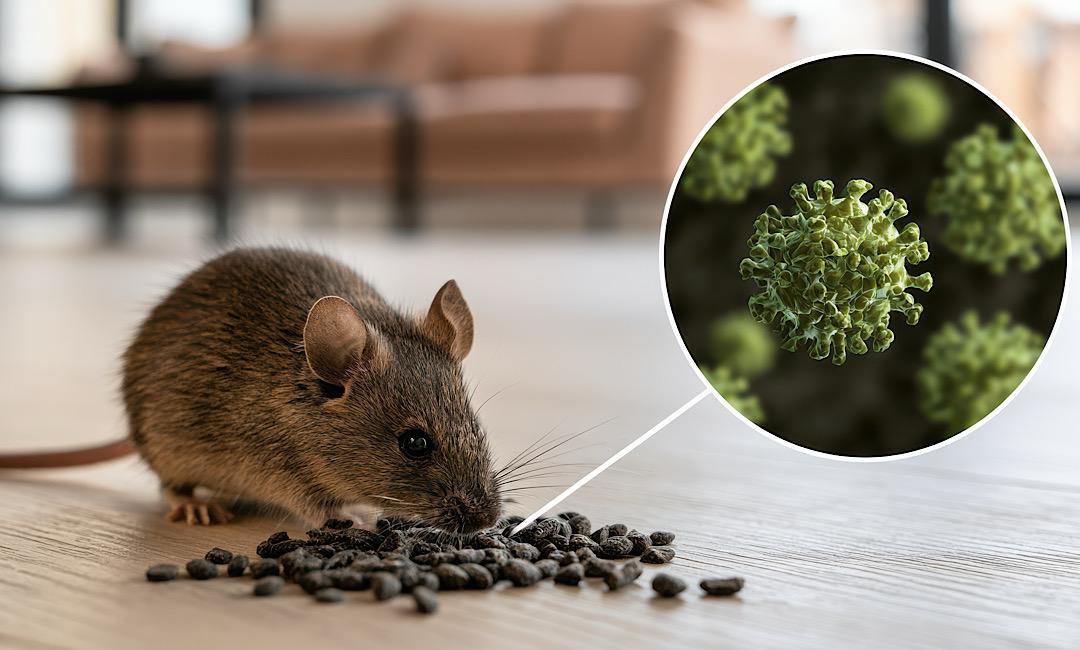
Rodent droppings and nesting materials can carry germs and can become a breathing hazard if disturbed. The safest approach is the CDC-recommended “wet method”: don’t sweep or vacuum droppings because that can kick contaminated dust into the air.
Quick safety checklist (before you enter the attic)
Ventilate first: open doors/windows (when possible) and allow fresh air time before cleaning enclosed spaces.
PPE basics: disposable gloves at minimum; consider a well-fitted respirator (especially if insulation is disturbed). Eye protection is smart in low-clearance attics.
Keep kids/pets away: isolate the work area and avoid tracking debris into living spaces.
No dry cleanup: do not sweep, dust, or vacuum droppings/nesting material. Use disinfectant + wipe-up steps instead.
Step-by-step: summer rat infestation cleanup (attic-focused)
Step 1: Confirm the problem is controlled (or schedule control first).
Cleanup works best after trapping/removal is underway. Otherwise, disturbed rodents can relocate to walls, duct chases, or crawl spaces and leave more contamination behind.
Cleanup works best after trapping/removal is underway. Otherwise, disturbed rodents can relocate to walls, duct chases, or crawl spaces and leave more contamination behind.
Step 2: Identify hotspots (without stirring dust).
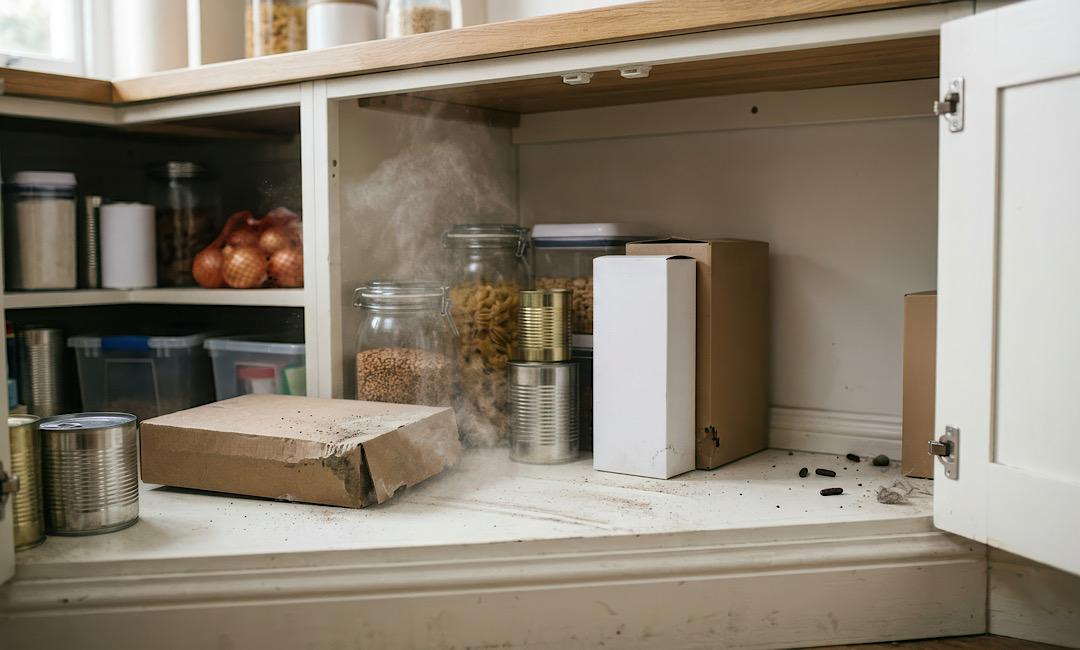
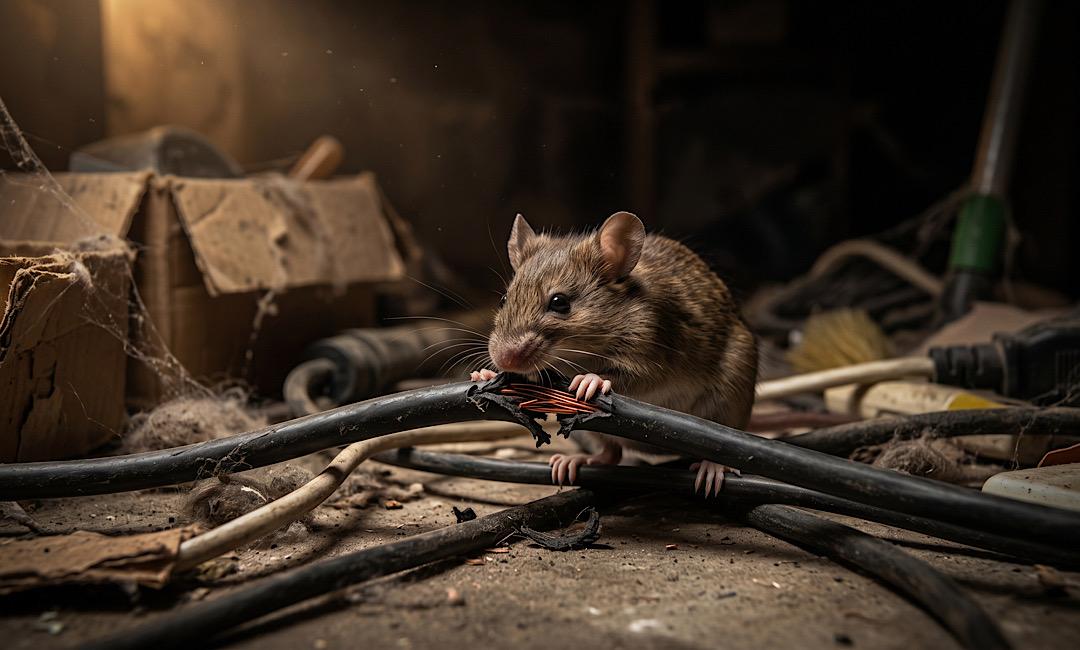
Look for droppings clusters, nesting piles, greasy rub marks along rafters, chewed insulation, and trails near HVAC platforms. If you smell strong ammonia, urine saturation may be present—common near entry points and along travel routes.
Look for droppings clusters, nesting piles, greasy rub marks along rafters, chewed insulation, and trails near HVAC platforms. If you smell strong ammonia, urine saturation may be present—common near entry points and along travel routes.
Step 3: Use the wet method for droppings and nesting material.
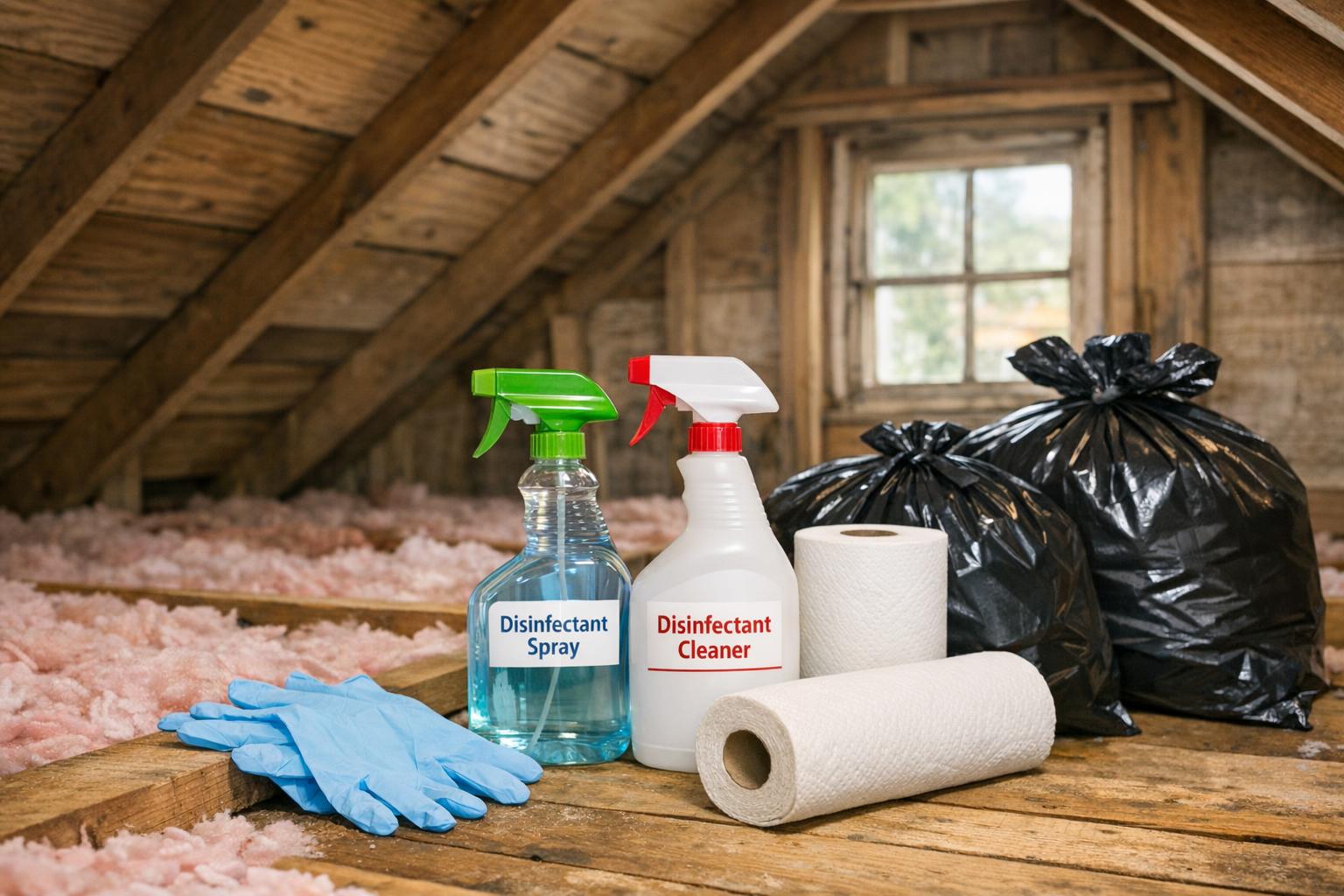
Spray droppings/urine/nesting material with disinfectant until thoroughly wet, let it sit per label directions, then wipe up with paper towels and bag the waste. The CDC recommends disinfecting and wiping (not sweeping/vacuuming) to reduce airborne exposure risk.
Spray droppings/urine/nesting material with disinfectant until thoroughly wet, let it sit per label directions, then wipe up with paper towels and bag the waste. The CDC recommends disinfecting and wiping (not sweeping/vacuuming) to reduce airborne exposure risk.
Step 4: Address contaminated insulation (the “hidden” cleanup step).
If insulation is matted, urine-soaked, or filled with droppings, surface wiping won’t solve odors or sanitation. Targeted removal and replacement is often the cleanest path—especially in humid summers when smells intensify.
If insulation is matted, urine-soaked, or filled with droppings, surface wiping won’t solve odors or sanitation. Targeted removal and replacement is often the cleanest path—especially in humid summers when smells intensify.
Tip: If you’re noticing recurring indoor allergy symptoms or musty odors after a rodent event, consider whether contamination has reached duct chases or return plenums.
Step 5: Seal entry points (or the cleanup won’t last).
Long-term success comes from exclusion: sealing gaps, screening vents properly, reinforcing soffit returns, and closing utility penetrations. Professional exclusion also helps avoid missteps like sealing rodents inside.
Long-term success comes from exclusion: sealing gaps, screening vents properly, reinforcing soffit returns, and closing utility penetrations. Professional exclusion also helps avoid missteps like sealing rodents inside.
What “cleanup” should include: a practical scope table
| Area | What to check | What “done right” looks like |
|---|---|---|
| Attic decking & rafters | Droppings clusters, rub marks, nesting | Wet-disinfect, wipe, bag waste; re-disinfect surfaces |
| Insulation | Matting, urine odor, visible pellets | Remove contaminated sections; replace as needed; prevent re-entry |
| HVAC areas | Droppings near air handlers, ducts, returns | Sanitize nearby surfaces; address duct contamination when indicated |
| Crawl space | Moisture, droppings on vapor barrier/soil, entry gaps | Moisture control + barrier integrity + sealing penetrations |
Note: For disinfectants, follow label directions for contact time. If you’re selecting EPA-registered disinfectants, EPA’s List N tool is a common reference for verifying products.
Did you know? Quick Lowcountry rodent facts
Vacuuming droppings can increase risk. Public health guidance recommends disinfecting and wiping instead of sweeping/vacuuming to reduce airborne exposure.
Odor is information. A sharp urine smell often signals repeated travel routes and saturation—meaning exclusion and insulation decisions matter as much as trapping.
Covered bait placement matters in regulated settings. South Carolina regulations for certain environments address safe rodenticide placement (for example, covered bait boxes to prevent contamination).
Local angle: Mount Pleasant + surrounding towns (where rodent calls surge in summer)
Rodent pressure doesn’t stop at a neighborhood line—especially with connected greenbelts, marsh edges, and older building stock. If you’re in Mount Pleasant, you’re not alone in dealing with summer attic activity. We regularly support homeowners across the area, including Charleston, Isle of Palms, Sullivan’s Island, Daniel Island, West Ashley, James Island, Hanahan, Goose Creek, and North Charleston.
Coastal-home reminder: shaded lots and humid crawl spaces can attract pests beyond rodents. If you’re also seeing roaches, ants, or spiders during the same stretch, bundling prevention often saves time and callbacks.
Need summer rodent removal + attic sanitation that actually holds?
Lowcountry Pest Management is family-owned with decades of local experience. If you’re dealing with a fast-moving summer rat problem in Mt. Pleasant, we can help with inspection, removal, sanitation planning, and exclusion to stop the next wave.
FAQ: Summer rat infestation cleanup in Mt. Pleasant, SC
Is it safe to vacuum rat droppings in my attic?
It’s not recommended. Public health guidance advises against sweeping or vacuuming droppings because it can stir up particles into the air. Use a disinfectant “wet method,” then wipe up and bag the waste.
Why does the smell get worse when it’s humid?
Humidity can amplify odors from urine saturation and contaminated insulation. If odor persists after surface cleanup, insulation removal/replacement and sealing entry points are often necessary for a lasting fix.
Should I clean first or trap first?
Usually trap/remove first (or at least begin control), then clean. If rodents are still active, you can end up cleaning the same area repeatedly—or push activity into harder-to-reach spaces.
What’s the difference between “rodent control” and “rodent exclusion”?
Control reduces or removes the rodents currently inside (trapping, monitoring). Exclusion focuses on sealing entry points so new rodents can’t get back in—especially important for rooflines, vents, and utility penetrations.
If I found droppings near vents, do I need duct cleaning?
Not always—but it’s worth evaluating if droppings are near returns, if odors persist when the HVAC runs, or if contamination may have entered duct chases.
Glossary (helpful terms you’ll hear during cleanup)
Exclusion: Sealing and reinforcing entry points (gaps, vents, penetrations) to prevent rodents from getting inside again.
Wet method: A safer cleanup approach that uses disinfectant to wet droppings/nesting material before wiping and bagging—avoids stirring contaminated dust.
Contact time: The amount of time a disinfectant must remain wet on a surface to work as directed on its label.
Urine saturation: When insulation/wood has absorbed enough urine to cause persistent odor and ongoing sanitation concerns—often requires removal of affected materials.
Want a pro to confirm entry points and build a plan that fits a coastal home? Contact Lowcountry Pest Management.