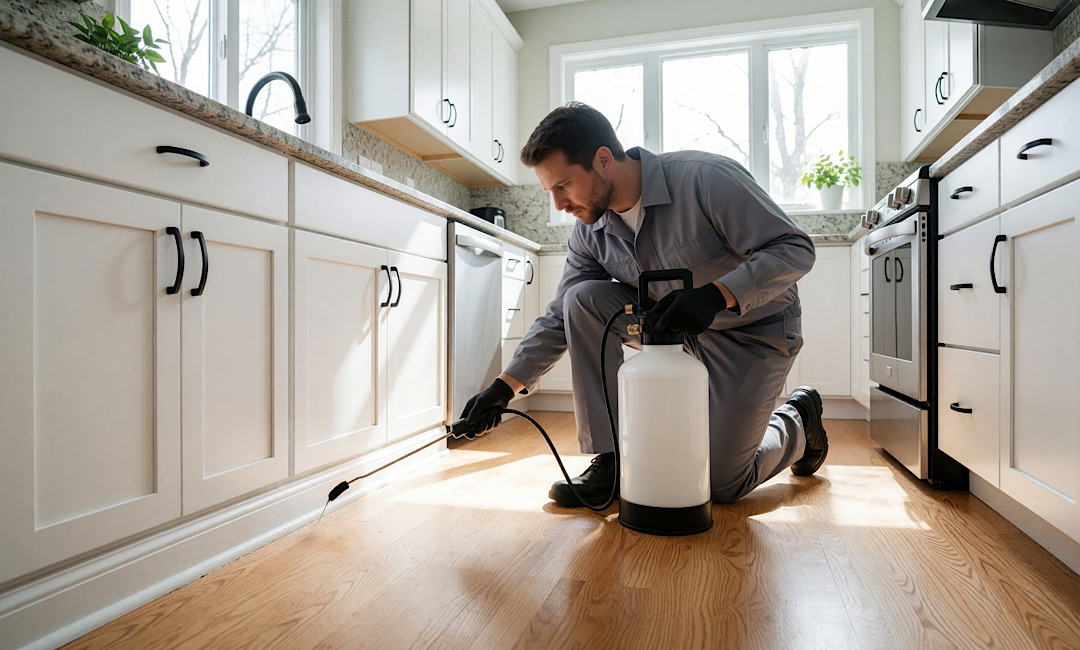
When small tan roaches show up in a kitchen, the first move is usually a can of spray from the grocery store. It seems to work, because the roaches you hit die. A few weeks later there are more, sometimes in the bathroom, sometimes in the unit next door. That isn’t bad luck. We treat German cockroaches in homes, condos and townhomes across Mount Pleasant and Charleston, and a large share of the hardest cases we see were made harder by over-the-counter sprays and foggers. Here is why, and what clears them.
Confirm It’s a German Cockroach First
German cockroaches (Blattella germanica) are about 1/2 to 5/8 inch long, light tan, with two dark parallel stripes behind the head. Nymphs are darker, nearly black, with a pale stripe down the back. They live indoors year round and cluster in warm, humid spots near food and water: the dishwasher motor compartment, the sink base, cabinet hinges, behind the refrigerator and inside coffee makers and microwaves.
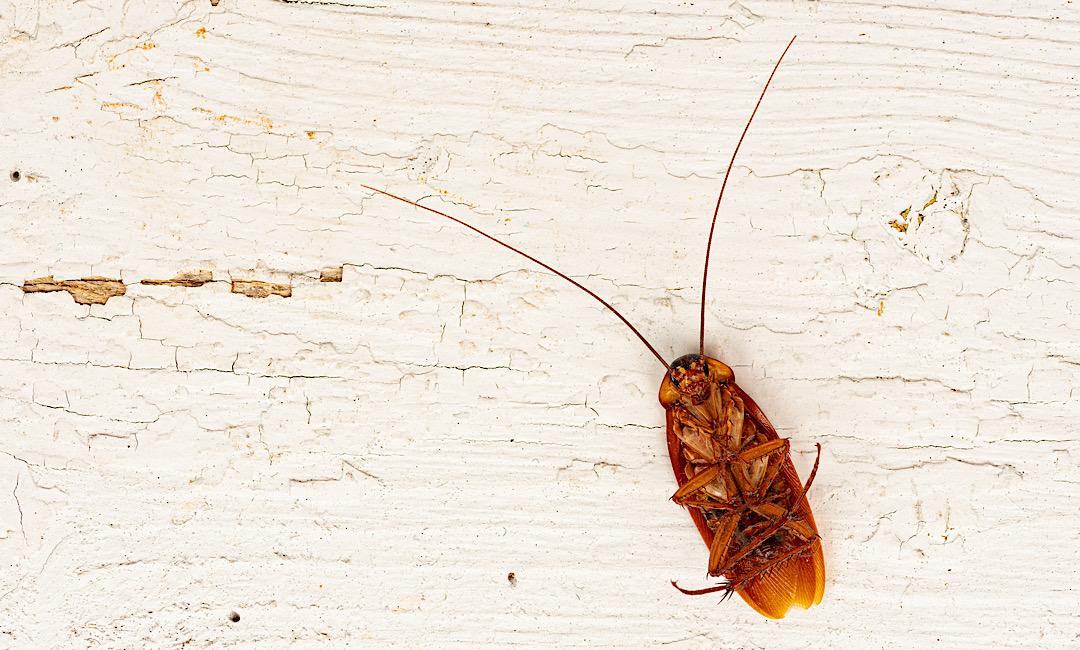
The large reddish brown roaches that turn up one at a time in a bathroom or garage are American or smokybrown cockroaches, the “palmetto bugs” that come in from outside. That’s a different treatment, covered in our article on palmetto bugs in Mt. Pleasant. Photos are in our pest library.
Store-Bought Sprays Spread the Colony
| Store-bought spray and foggers | Professional bait program | |
|---|---|---|
| What it kills | Roaches it touches | Roaches that feed, plus others through secondary transfer |
| Effect on hidden roaches | Repels them deeper into voids and adjacent rooms | Draws them to bait in their harborage |
| Effect on eggs | None. Egg cases are protected. | Insect growth regulator stops the next generation from breeding |
| Effect on neighbors | Pushes roaches through shared walls | Contained to placement sites |
| Residue | Coats surfaces and contaminates bait | Small placements in cracks, out of reach |
Most consumer sprays are repellent. They kill what they hit and push the rest of the colony into wall voids, behind cabinets and into rooms that had no roaches before. Foggers do the same at room scale without reaching the cracks where German cockroaches actually live, and they leave residue on counters and dishes.
Spray Residue Makes Bait Fail
Professional German cockroach work runs on gel bait. Roaches eat it, return to harborage and spread the active ingredient through feces and contact. Spray residue near a bait placement makes roaches avoid the area. We observe noticeably slower clearance in kitchens that were heavily sprayed before our first visit.
Industry Warning: Some German cockroach populations have developed bait aversion, a documented behavioral resistance where roaches reject certain bait formulations, as well as resistance to common insecticide classes. Repeating the same store-bought product accelerates both. A professional program rotates active ingredients and bait matrices to stay ahead of it.
The Math Behind the Rebound
A female carries an egg case (ootheca) holding roughly 30 to 40 eggs until just before it hatches, and nymphs reach breeding age in about two months at indoor temperatures. Sprays don’t penetrate egg cases, so a new cohort keeps hatching after every treatment. Any plan that skips a growth regulator and follow-up visits is fighting the same population repeatedly.
Shared Walls Change the Treatment Plan
In attached housing, units share wall voids, plumbing chases and electrical runs. That means:
- A unit can be reinfested from a neighbor no matter how well it’s treated.
- Spraying or fogging one unit pushes roaches into the units beside, above and below it.
- Treating one unit at a time without inspecting adjoining units often produces a problem that never quite ends.
The Messy Middle: The condo that kept getting reinfested
A pattern we see in condo buildings: one owner treats, monitors go quiet for a month, then roaches reappear along the same plumbing wall. The source is the unit on the other side of the shared sink wall, where the neighbor has been using foggers. The resolution is coordination. Notify the HOA or property manager, inspect adjoining units on both sides and on the floor above and below, and treat together. Sealing the plumbing penetrations behind both sink bases closes the highway between units.
Owners of larger buildings can read our guide to pest control for apartment complexes. Restaurants face constant reintroduction through deliveries, covered in our German cockroach guide for Charleston businesses.
What Clears German Cockroaches
- Inspection with sticky monitors to locate harborage and measure progress.
- Gel bait in small placements inside cracks, hinges and voids.
- An insect growth regulator (IGR) so nymphs can’t mature into breeders.
- Dust in dry voids behind outlet covers and under toe kicks.
- Sealing gaps around pipes, between cabinets and walls and along the backsplash.
- Follow-up visits about two weeks apart to catch roaches that hatch after the first round.
Match Your Situation to the Right Response
| If… | Then… |
|---|---|
| You’ve seen a few at night in one area | Stop spraying, clean up food and moisture, and schedule treatment now while the population is small. |
| You see them in daylight | Expect a larger population. Daytime activity usually means crowding. |
| You live in a condo or townhome | Notify the HOA or manager and ask for adjoining units to be inspected. |
| You’ve already sprayed heavily | Tell the technician. Surfaces may need cleaning before bait goes down. |
| You just moved in | Check under the sink, behind the refrigerator and in cabinet hinges before unpacking. |
Frequently Asked Questions
Why do I have them in a clean home?
They hitchhike in grocery bags, delivery boxes, used appliances and moving boxes, or come through shared walls. Cleanliness speeds treatment but doesn’t prevent introduction.
Are they dangerous?
They don’t bite or sting, but German cockroach allergens are a recognized asthma trigger, especially for children, and they carry bacteria onto food surfaces.
The Bottom Line
- Light infestation: typically clears in two to four weeks.
- Kitchen-wide infestation: typically six to twelve weeks across several visits.
- Biggest single delay: spray residue and fogging before professional treatment.
- Attached housing: coordinated treatment of adjoining units is what makes results stick.
If you’re seeing small striped roaches, contact Lowcountry Pest Management to schedule an inspection, and put the spray can away until we get there. Learn more about our cockroach control services.
About the Author
Lowcountry Pest Management
Lowcountry Pest Management is a family-owned pest control company that has protected homes and businesses in Mount Pleasant and Charleston, SC for more than 22 years. Our team handles rodent control, termite control, mosquito control, crawl space encapsulation and duct cleaning throughout the Lowcountry.