Why fire ant mounds pop up overnight in the Lowcountry
If you live in Mount Pleasant and you’re seeing fresh, tall mounds after a heavy summer rain, you’re not imagining things. Fire ants are often present year-round, but rainfall and heat can push them to rapidly rebuild and relocate soil—making mounds suddenly look “new” and more noticeable. For families with kids, pets, and landscaped yards, the goal isn’t just fewer ants—it’s fewer bites, fewer surprise mounds near walkways, and fewer repeat infestations around the same high-traffic areas.
Local SEO focus: This guide is written for homeowners looking for fire ant control in Mt Pleasant, SC—and it also applies to nearby areas like Charleston, Isle of Palms, Sullivan’s Island, Daniel Island, James Island, West Ashley, Hanahan, Goose Creek, Summerville, and North Charleston.
What makes fire ants so hard to “wipe out”?
Fire ants are tough because you’re not fighting a few ants—you’re fighting a highly organized colony. A mature colony can contain tens (or hundreds) of thousands of worker ants plus reproductive ants, and colonies can be structured with a single queen or multiple queens. Multiple-queen colonies can rebound quickly and spread in a way that feels like “we treated one mound and three more appeared.”
Another reason DIY efforts stall: treating only the mound you can see often misses foraging ants and satellite activity across the yard. That’s why successful programs usually combine a yard-wide strategy (to reduce the colony network) with targeted mound treatments (to address immediate hazards).
When fire ant mounds are most active around Mount Pleasant
After heavy rain
Rain can flood parts of the nest and change soil conditions, prompting ants to move brood and rebuild. You may notice taller, fresher-looking mounds—often right where you don’t want them: along sidewalks, patio edges, and playground areas.
During hot stretches
Warm soil and active foraging accelerate growth. In summer, colonies can expand faster, and bites become more common because families spend more time outside.
When lawns are irrigated
Frequent watering can keep soil workable and support insect activity (food sources), which may help colonies persist—especially in mulched beds and along foundation lines.
Step-by-step: safer, smarter fire ant control for families with kids and pets
1) Confirm you’re dealing with fire ants (before you treat)
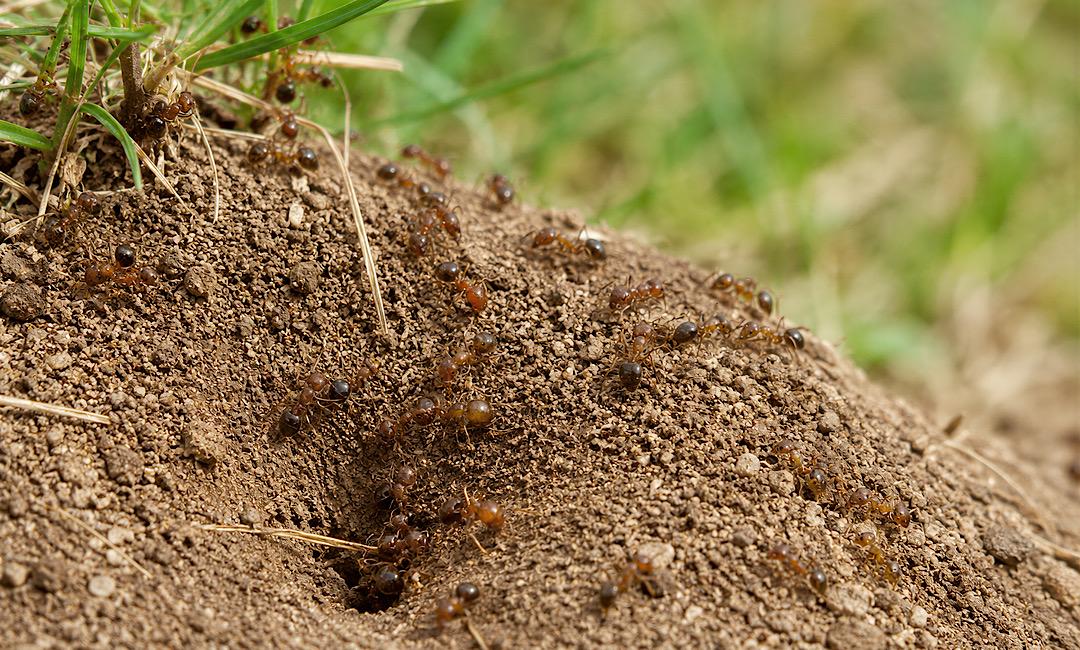
Fire ant mounds often appear as loose, crumbly soil without a clear “hole” on top. If you lightly disturb the mound (use a stick, not your shoe), fire ants respond quickly and aggressively. If you’re unsure, it’s safer to get a professional ID so you don’t waste product or accidentally drive the wrong insects deeper into landscape beds.
2) Use a “broadcast + target” strategy (not just mound whack-a-mole)
The most consistent approach is:
Broadcast bait across the lawn and perimeter zones to reduce colonies over time, then treat problem mounds in high-risk areas (walkways, play zones, under mailboxes) for faster relief.
Important detail: baits work when foraging ants carry them back to the colony, so timing and proper application matter. Avoid mixing bait with fertilizer or applying in a way that reduces bait attractiveness.
3) Don’t disturb mounds before treatment
Kicking, flooding, or digging the mound can scatter ants and make control less predictable. Treat first, then monitor. If you need immediate help around a doorway or play area, targeted mound treatment may be appropriate—but it still works best as part of a yard-wide plan.
4) Reduce “mound-friendly” conditions around the yard
Trim back dense groundcover near patios and AC pads so you can spot new mounds earlier.
Keep mulch managed (avoid overly thick layers) in beds that border sidewalks and play areas.
Address moisture issues (drip lines, soggy spots, downspout discharge) that can drive insect activity close to the home.
5) Make safety the priority (especially with children and pets)
Any ant product—bait, granules, or liquid—should be selected and applied strictly according to label directions. If you have toddlers who touch the grass often, pets that graze, or backyard chickens, it’s worth choosing a professional, eco-conscious plan so product choice, placement, and re-entry timing are handled correctly.
Did you know?
Fire ant baits are designed to be carried into the colony, which is why yard-wide placement often beats “pour it on the mound” methods for long-term reduction.
Some colonies have multiple queens, which can make populations rebound faster and appear to spread across a lawn.
Fertilizer and bait shouldn’t be applied together in ways that reduce bait attractiveness—small application mistakes can lead to disappointing results.
Fire ant treatment options: what to use where (quick comparison)
| Option | Best for | Speed | Common pitfalls | Family/pet considerations |
|---|---|---|---|---|
| Broadcast bait | Whole-yard population reduction | Days to weeks | Applying at wrong time; mixing with fertilizer; expecting immediate results | Follow label; consider professional selection/placement for play areas |
| Targeted mound treatment | A few dangerous mounds near activity zones | Hours to days | Disturbing mound first; treating only visible mounds; skipping yard-wide plan | Keep kids/pets away per label; avoid tracking product indoors |
| Professional outdoor program | Recurring mounds, multi-queen pressure, high-risk yards | Fast relief + long-term control | Inconsistent DIY schedule; wrong products for local conditions | Eco-friendly options and correct re-entry guidance reduce risk |
A Mount Pleasant angle: where fire ants tend to show up first
In coastal South Carolina, fire ants often concentrate where the yard is sunny, well-watered, and regularly disturbed—think lawn edges, new sod seams, mulched beds, and along hardscape. Around Mount Pleasant, we commonly see repeat mound activity:
Along sidewalks and driveways (warm, compacted edges)
Near irrigation heads and drip lines (consistent moisture)
In mulched beds around palmettos and shrubs (hidden foraging)
Near fences, gates, and AC pads (low disturbance until it’s a problem)
Need help with fire ant control in Mt Pleasant, SC?
Lowcountry Pest Management provides eco-friendly, family-conscious outdoor treatments designed for Lowcountry conditions—so you can enjoy the yard without worrying about surprise mounds and painful stings.
Also dealing with outdoor biting pests? Consider seasonal protection with our Mosquito Control.
FAQ: Fire ant control in Mount Pleasant
Why do I see more mounds right after it rains?
Rain changes soil moisture and can flood parts of the nest, so fire ants rebuild and push soil upward quickly. The colony may have been there before—but the mound becomes more visible after storms.
Is it better to kill the mound or treat the whole yard?
For recurring problems, whole-yard control is usually the missing piece. Targeted mound treatments help with immediate hazards, but broadcast approaches reduce the wider population that keeps producing new mounds.
How long does fire ant bait take to work?
Baits are not instant-kill products. They rely on foraging ants carrying the bait back into the colony, so results are typically measured in days to weeks depending on weather, product, and colony size.
Can I treat fire ants if I have pets and kids?
Yes—but product selection, placement, and re-entry timing matter. Always follow label instructions. If your yard is a daily play zone, professional treatment helps ensure the plan is both effective and risk-aware.
What if fire ants keep coming back every summer?
That pattern is common in the Lowcountry. Seasonal heat, rain cycles, and neighboring properties can keep pressure high. A consistent program that combines prevention and targeted treatment is typically the most reliable way to keep mounds from reappearing in the same places.
Looking for broader indoor/outdoor coverage beyond fire ants? See our full services or browse the pest library to identify what you’re seeing.
Glossary
Broadcast bait: Spreading bait across a lawn so foraging ants carry it back to the colony, reducing the population over time.
Mound treatment: Applying a product directly to an individual mound to reduce that specific colony activity quickly.
Monogyne colony: A fire ant colony with a single egg-laying queen.
Polygyne colony: A fire ant colony with multiple egg-laying queens, often associated with faster rebound and denser populations.
If you’re dealing with multiple mounds after every storm, or you want a safer plan for a kid- and pet-friendly yard, schedule a visit with Lowcountry Pest Management here: Contact Us.